
Posts by len.cristobal

7 ways balanced scorecard certification gets misapplied in practice

May 7th, 2026 Posted by Certifications, Courses, Professional Development 0 thoughts on “7 ways balanced scorecard certification gets misapplied in practice”
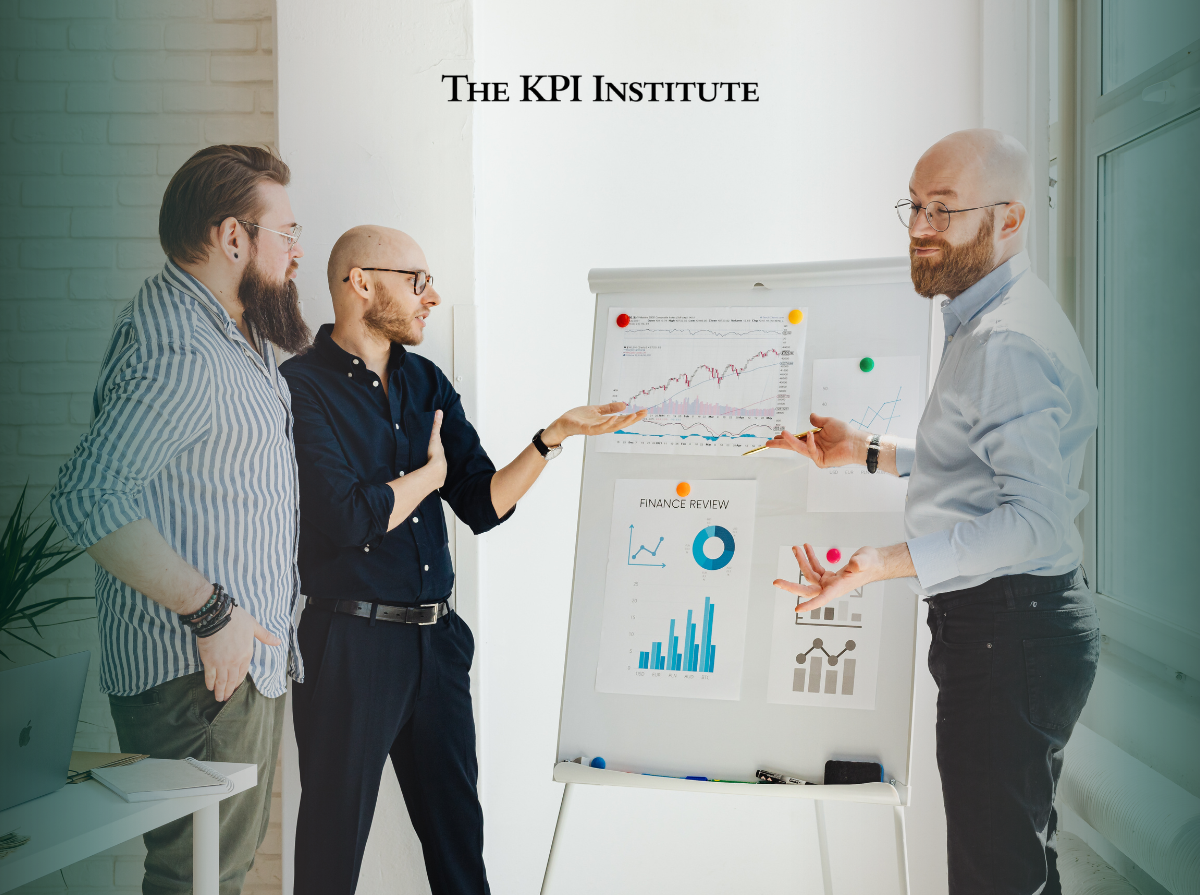
Balanced scorecard certification is designed to build capability in strategy execution, KPI design, and organizational alignment. But in practice, what people learn often gets simplified once it enters real organizations. Instead of being used as a strategy execution system, it is frequently reduced to reporting tools, templates, or one-time planning exercises. The gap is rarely in the framework itself. It’s in how it gets applied.

1. Turning it into a reporting tool

One of the most common misapplications is treating balanced scorecard certification as training for dashboards and KPI reporting. Organizations often end up using the scorecard mainly to track performance rather than to drive strategic decisions. It starts to sit inside reporting cycles instead of guiding how decisions get made across teams. Over time, meetings revolve around numbers rather than choices that move strategy forward.

2. Copying KPIs instead of designing them

After certification, many organizations rely on generic KPIs or borrowed templates. This creates scorecards that look structured but do not reflect actual strategy. The result is a measurement system that feels complete on paper but weak in practice. Teams then track indicators that do not really connect to their real priorities.

3. Treating the four perspectives as separate buckets

Learning and growth, internal processes, customers, and financial outcomes are often treated as isolated sections. When this happens, the scorecard becomes fragmented rather than integrated, and the logic connecting performance drivers is lost. Each department tends to focus on its own section without seeing how the pieces connect. Decisions then get made in silos, and alignment becomes harder to maintain.

4. Overloading the system with metrics

Another common issue is adding too many indicators. Instead of creating clarity, this leads to noise. People lose track of what matters most because attention gets spread across too many measures. Meetings then turn into reviews of long lists instead of focused discussion on key drivers.

5. Failing to connect strategy to daily work

Even when strategy is clearly defined, it often does not translate into operational actions. The scorecard stays at management level and does not reach day-to-day activities. Employees may understand targets but still not see how their work connects to them. This gap creates distance between planning and execution.

6. Treating implementation as a one-time project

Many organizations build a Balanced Scorecard once and then leave it unchanged. Over time, it becomes outdated because it is not reviewed as conditions shift. What once reflected strategy starts to lose relevance. Teams then continue using a system that no longer matches current priorities.

7. Weak ownership and accountability

Without clear governance, the scorecard becomes a document rather than a system. No single person or group takes responsibility for keeping it active and aligned. As a result, updates slow down and decisions stop referencing it. Eventually, it sits in the background and stops influencing how work gets done.

Final takeaway

Balanced scorecard certification is not the problem. What matters more is how the concepts are interpreted and applied inside organizations. In many cases, the framework gets reduced to reporting routines or static structures, which limits its role in strategy execution. When it is applied as part of ongoing management practice connected to decision-making and operations, it functions more effectively as a system for executing strategy.

The Certified Balanced Scorecard Management System Professional and Practitioner program by The KPI Institute focuses on exactly that gap between concept and execution.  Explore the program details, benefits, and upcoming schedule HERE to see how it applies in practice.

_____________________________________________________________________________________

The KPI Institute is a global leader in business performance research and solutions, specializing in practice domains including strategy, key performance indicators (KPIs), employee performance, customer service, and innovation management. For over 20 years, The KPI Institute has established international standards and best practices for KPIs across both private and public sectors.

What We Offer:

  • Certifications & Training: Practical programs delivered worldwide—live online, offsite, and customized—spanning 6 continents and 7 offices in Australia, Southeast Asia, Europe, and the Middle East.
  • Knowledge Platforms: Access to www.smartKPIs.com, the world’s largest documented database of KPIs, with over 21,600 examples published and 148,000+ members in our online communities.
  • Publications: Over 460 publications, including books, research papers, and practical guides, providing insights to enhance organizational performance.
  • Advisory & Implementation Support: Expert guidance to apply insights in practice for measurable impact.

Our Reach and Impact:

  • 81,000+ companies registered on our platforms
  • 2.5 million+ professionals reached through training and knowledge services
  • 128 research client countries and 120 global partner organizations 

Website: www.kpiinstitute.org

Email: office@kpiinstitute.org

LinkedIn: The KPI Institute
Is a performance management certification actually worth it? Here’s the truth

April 29th, 2026 Posted by Certification, Certifications, Courses, Performance Management 0 thoughts on “Is a performance management certification actually worth it? Here’s the truth”


Performance management looks straightforward when it is written down. KPIs get defined, dashboards get built, reports go upward, and decisions are expected to follow. In practice, the link between measurement and action often feels weaker than it should be.

A study published in the International Journal of Productivity and Performance Management found that a large portion of organizations struggle to connect performance measurement systems with actual strategic execution, even when KPI frameworks are already in place .

That gap tends to push performance management work into redesign territory rather than simple reporting.

When KPIs exist but decisions still drift

Most organizations do not suffer from a lack of data. They suffer from too much of it, without clear structure.

Research shows that excessive KPI counts can reduce managerial focus and weaken prioritization quality, especially when metrics are not clearly tied to strategic objectives .

This is where dashboards start looking complete but still leave leadership discussions unclear.

Strategy execution still struggles in many settings

A peer-reviewed study in Strategic Management Journal observed that strategy implementation failures often stem from weak alignment between planning systems and operational measurement structures .

Even when strategic goals are well defined, the absence of a structured performance system can slow down execution and reduce consistency across departments.

What structured performance management training focuses on

The KPI Institute’s Certified Performance Management Professional program is built around this type of gap between strategy and execution.

The focus is less about isolated KPIs and more about how a full performance system operates. Strategy mapping is used to translate high-level objectives into measurable elements. Scorecards and dashboards are treated as decision tools rather than reporting outputs.

A significant part of the learning also looks at performance governance. That includes how reporting flows are structured, how accountability is distributed across teams, and how data quality is maintained so that reporting cycles remain consistent.

There is also emphasis on how performance systems support real operational decisions, particularly when KPIs signal underperformance and require structured action rather than informal response.

Topics usually discussed inside the program

The content moves across several connected areas of performance practice rather than isolated tools.

There is coverage of how performance management systems developed over time and how modern environments introduced new pressures such as digital transformation, ESG reporting requirements, and stakeholder expectations.

A large portion of the discussion focuses on system architecture. This includes how strategy maps, scorecards, dashboards, and initiative portfolios work together rather than function separately.

Governance models also take a central role. Topics include reporting structures, data quality control, audit readiness, and how performance responsibilities are distributed across organizational levels.

On the operational side, attention goes into diagnosing weak KPIs, tracing root causes, and translating findings into structured improvement initiatives that can be tracked over time.

Educational resources and practical support materials

Alongside the sessions, participants receive a set of structured materials that support real application work.

At The KPI Institute, these typically include course slides, detailed notes, quizzes, and reference guides that explain how performance systems are built and maintained in practice. There is also a performance management poster and supporting documentation formats used for initiative tracking.

The learning materials extend further into published research reports on performance management trends and strategy execution practices, covering multiple years of industry observation.

A large part of the toolkit focuses on ready-to-use templates. These include strategy maps, scorecards, dashboards, performance maturity models, initiative portfolios, KPI documentation forms, and monthly reporting structures. Separate guides also explain how to build and administer scorecards and dashboards in operational settings.

Additional resources include KPI catalogues, glossary references, and curated publications that document how organizations structure performance systems in real environments.

Participants also gain access to video content and webinar series that cover applied performance management topics, along with a KPI database containing hundreds of fully documented indicators and thousands of additional KPI references for benchmarking and design work.

So does a certification like this actually matter?

The usefulness depends on where someone stands inside an organization.

When performance systems already function smoothly, the benefit may feel incremental. When reporting is fragmented, KPIs are overloaded, or strategy execution feels disconnected from measurement, structured training becomes more relevant.

The core focus is not on learning more metrics. It is on understanding how performance systems are built, governed, and used so that strategy, measurement, and action do not operate in separate lanes.

In many organizations, that alignment is still the missing piece.

To better understand whether a performance management certification fits your needs, take a look at how The KPI Institute delivers the Certified Performance Management Professional program in this brochure.

KPI and business strategy courses

_____________________________________________________________________________________

The KPI Institute is a global leader in business performance research and solutions, specializing in practice domains including strategy, key performance indicators (KPIs), employee performance, customer service, and innovation management. For over 20 years, The KPI Institute has established international standards and best practices for KPIs across both private and public sectors.

What We Offer:

  • Certifications & Training: Practical programs delivered worldwide—live online, offsite, and customized—spanning 6 continents and 7 offices in Australia, Southeast Asia, Europe, and the Middle East.
  • Knowledge Platforms: Access to www.smartKPIs.com, the world’s largest documented database of KPIs, with over 21,600 examples published and 148,000+ members in our online communities.
  • Publications: Over 460 publications, including books, research papers, and practical guides, providing insights to enhance organizational performance.
  • Advisory & Implementation Support: Expert guidance to apply insights in practice for measurable impact.

Our Reach and Impact:

  • 81,000+ companies registered on our platforms
  • 2.5 million+ professionals reached through training and knowledge services
  • 128 research client countries and 120 global partner organizations 

Website: www.kpiinstitute.org.

Email: office@kpiinstitute.org

LinkedIn: The KPI Institute
Recent Comments

    Archives
