
Posts tagged "Governance Performance"

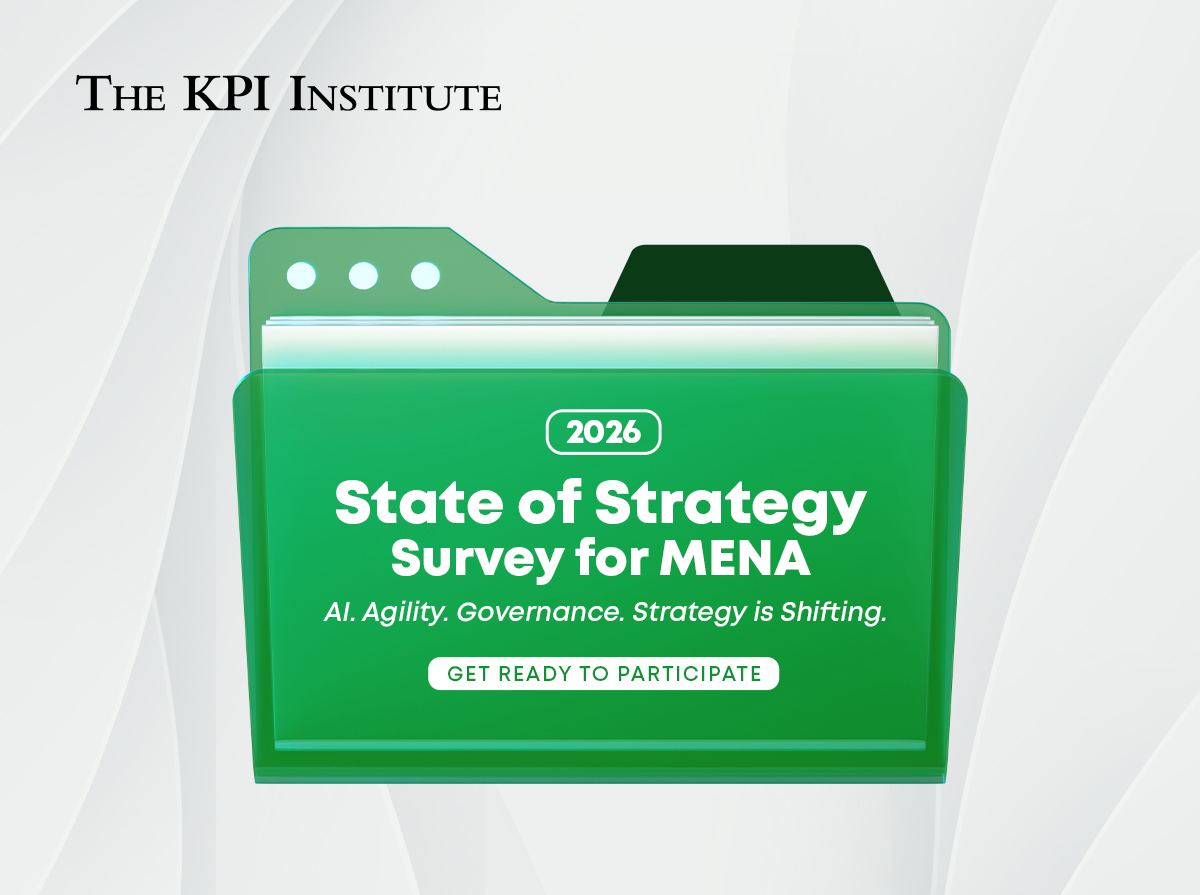
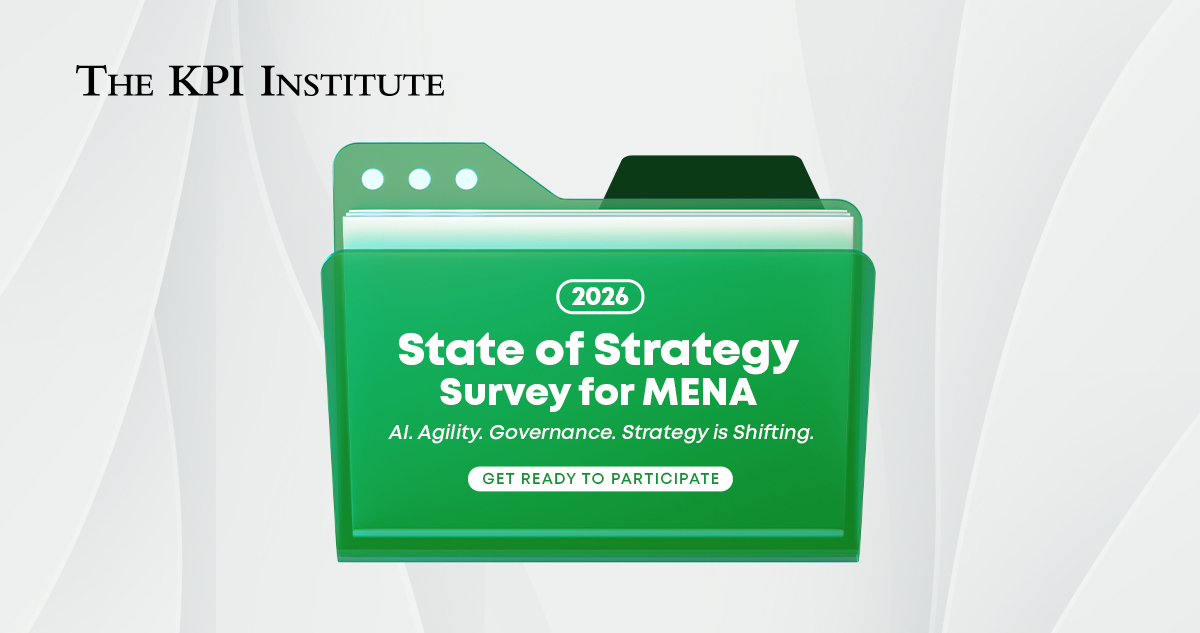
Is your strategy ready for 2026? Join the State of Strategy Survey and access exclusive FREE resources

February 5th, 2026 Posted by Publications 0 thoughts on “Is your strategy ready for 2026? Join the State of Strategy Survey and access exclusive FREE resources”

The 2026 State of Strategy Management Practice Survey is live! Gain exclusive resources to strengthen your strategy while sharing your insights on AI, agility, governance, and sustainability in Middle East and North Africa (MENA) organizations. Join the survey here!

Most organizations can create strategies, but they struggle to execute them. Plans are approved and targets set, yet day-to-day realities often derail results. As MENA organizations face rapid change, strategy leaders must do more than plan. They must adapt, execute, and deliver. To capture how organizations are responding, The KPI Institute launched the 2026 State of Strategy Management Practice Survey.

The survey invites strategy and performance professionals across the region to share their perspectives on the challenges most likely to shape strategy execution in 2026. These include artificial intelligence (AI) integration in decision-making, accelerating planning cycles, growing governance and compliance demands, and rising sustainability and environmental, social, and governance (ESG) expectations. 

This forward-looking initiative builds on key insights from the State of Strategy Management Practice – 2025 MENA Region report. Last year’s findings revealed a region in transition, with strategic planning becoming more formal and structured, signaling greater maturity in long-term decision-making. At the same time, execution challenges persisted. Confidence in translating strategy into measurable outcomes declined for the second consecutive year, with nearly 80% of professionals reporting firsthand experience with execution failure.

The 2025 data also highlighted an evolution in performance management systems, with organizations increasingly prioritizing agility, alignment, and accountability—while still facing gaps in capability and execution, particularly between large organizations and small and medium-sized enterprises (SMEs). Together, these insights underscore a clear message: strong plans are not enough. Execution capability will define organizational success in 2026.

With this, The KPI Institute invites you to share your perspective on emerging challenges in 2026 and welcomes your 2026 strategy prediction. Join the survey now and receive access to exclusive resources, including the Top 25 Strategy and Performance KPIs – 2025 Edition and the State of Strategy Management Practice – 2025 MENA Region report. 

Free digital editions: from culture to AI, Performance Magazine reveals what professionals need this year

January 28th, 2026 Posted by Publications 0 thoughts on “Free digital editions: from culture to AI, Performance Magazine reveals what professionals need this year”

Workforce disengagement, technological shifts, mounting sustainability requirements, and growing pressure on public institutions defined much of 2025. For leaders and professionals, this meant being asked to do more—with less certainty and fewer margins for error.

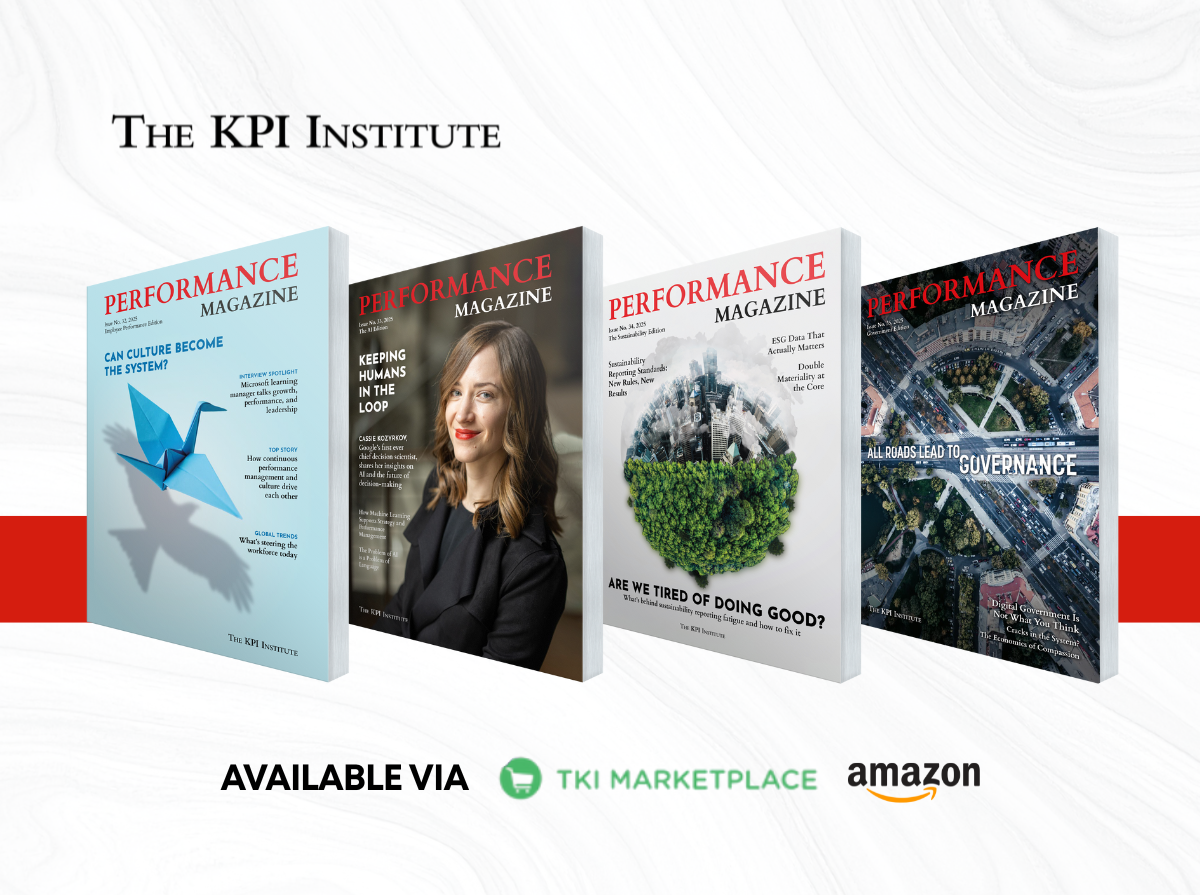
Performance Magazine’s 2025 print editions respond directly to these challenges, offering structured insight, practical perspectives, and data-informed analysis to help organizations make sense of complexity and turn it into informed action across strategy and performance management.

Performance Magazine Issue No. 32, 2025 – Employee Performance Edition

This edition explored organizational culture as a core enabler of performance rather than a background influence. It examined how culture can be applied deliberately through systems, behaviors, and continuous performance management practices to strengthen alignment, engagement, and long-term results, while also addressing global workforce trends such as employee well-being, stress, and the “Great Detachment.” Access the free digital edition on the TKI Marketplace or purchase the print edition via Amazon.

Performance Magazine Issue No. 33, 2025 – AI Edition

The AI Edition focused on how artificial intelligence (AI) is reshaping strategic leadership, decision-making, and performance management. Through expert perspectives, practical tools, and ethical guidance, the issue supported leaders in moving from experimentation to responsible, real-world AI adoption—without losing the human element. Read the digital version for free on the TKI Marketplace or order a printed copy from Amazon.

Performance Magazine Issue No. 34, 2025 – Sustainability Edition

Are we tired of doing good? This Sustainability Edition examined the growing pressure of environmental, social, and governance (ESG) reporting and the fatigue it creates for organizations. The issue explored how evolving regulations and expectations are prompting companies to rethink sustainability strategies and refocus on initiatives that generate real performance and long-term value. Explore the digital edition for free on the TKI Marketplace, or buy the print edition on Amazon.

Performance Magazine Issue No. 35, 2025 – Government Edition

The Government Edition examined governance and performance in the public sector amid geopolitical instability and global disruption. Drawing on insights from the Government Services Index (GSI) 2025, the issue analyzed government effectiveness across regions and featured expert commentary, interviews, and best practices from high-performing governments. Download the digital edition for free via the TKI Marketplace or request a print copy from Amazon for a minimal fee.

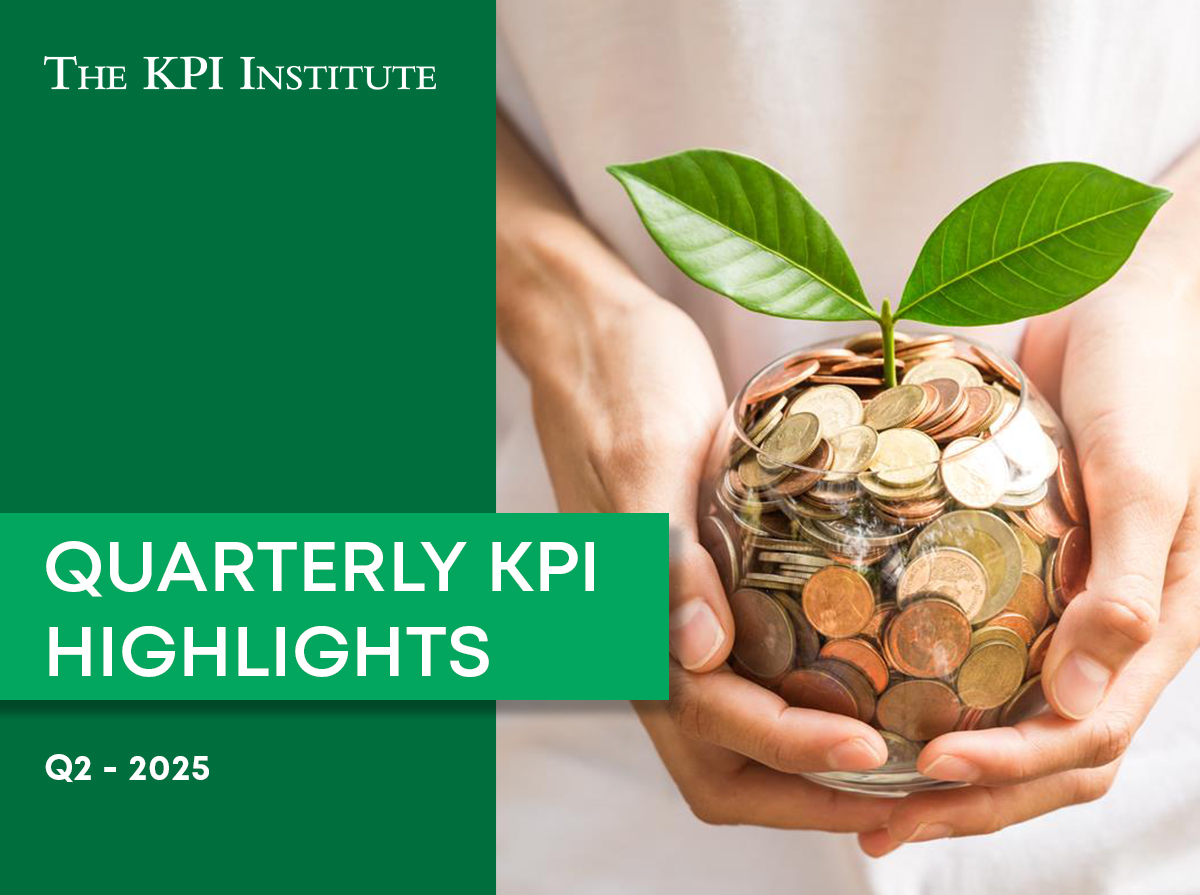
Quarterly KPI highlights: balancing employee well-being, sustainability, and service efficiency

June 18th, 2025 Posted by KPIs 0 thoughts on “Quarterly KPI highlights: balancing employee well-being, sustainability, and service efficiency”

Balancing business priorities can feel like maintaining a three-legged stool—if one leg is weaker or shorter than the others, stability is lost. In the same way, organizations today must give equal attention to employee well-being, sustainability, and service performance to achieve long-term success. Each leg represents a critical area of performance, and without clear indicators to measure and manage them, efforts can falter despite the best intentions.

Aon’s 2022–2023 Global Wellbeing Survey reveals that employee well-being has become a leading priority for employers across the Asia Pacific (APAC) region, with nearly 40% identifying it as their top focus for the next five years. Since 2020, investments in well-being programs in APAC have increased by 27%, and half of the surveyed companies now allocate at least 4% of their total company and benefits budgets to well-being initiatives. However, despite these growing commitments, employee well-being continues to decline. The data shows that 38% of employees are at risk of mental health challenges, and over 65% are already experiencing burnout.

On the consumer side, sustainability is gaining ground as a key purchasing driver. A 2024 PwC survey revealed that consumers are willing to pay an average premium of 9.7% for goods that are sustainably produced or sourced, even in the face of economic uncertainty. Supporting this trend, research shows that strong environmental, social, and governance (ESG) performance is increasingly linked to stronger financial returns. According to Kroll’s ESG and Global Investor Returns Study, companies categorized as ESG Leaders achieved an average annual return of 12.9% globally, substantially higher than the 8.6% return of ESG Laggards. This reflects a nearly 50% performance premium for companies with high ESG ratings.

At the same time, service efficiency remains a key differentiator in customer loyalty. In the Contact Center Trends 2025, research reveals that call centers that minimize wait times tend to build stronger customer loyalty. When customers are satisfied with how long they wait, they are three times more likely to recommend the brand and 2.6 times more likely to trust it and make repeat purchases.

In light of these trends, it is more important than ever for organizations to adopt a balanced approach to performance management. One that reflects the interconnected nature of well-being, sustainability, and financial outcomes. This quarter, The KPI Institute spotlights three key performance indicators (KPIs) of the Month, and each illustrates how organizations can track and balance people, planet, and profit. 

KPI of April: % Employee Burnout Rate – This metric measures the proportion of employees experiencing symptoms of burnout during the reporting period. This KPI is used to assess workplace conditions and track overall employee well-being.

Burnout poses serious risks to productivity, engagement, and employee retention, which is why organizations need to track it early and take preventive action. Using reliable tools like the Maslach Burnout Inventory (MBI) can support accurate assessment. The MBI consists of 22 items that evaluate emotional exhaustion, detachment, and a diminished sense of achievement. To learn more about this tool and others like it, you can download the free digital poster from the TKI Marketplace.

KPI of May: $ Carbon offset investments – This indicator tracks the organization’s investment in purchasing or generating carbon offsets, each equivalent to one metric ton of carbon dioxide reduced or removed from the atmosphere. These offsets typically support certified projects aimed at lowering greenhouse gas (GHG) emissions. The main goal is to help organizations reduce their carbon footprint and contribute to global climate action.

Various registries offer carbon offsets, with prices ranging from as low as $1 to over $30 per metric ton, depending on the project’s type, quality, and certification. An analysis by Carbon Brief shows that top carbon credit buyers from 2020 to 2022 include Shell, Volkswagen, and Chevron. Want to learn how to get started with carbon offsetting and align your environmental KPIs with global standards? Download the free digital poster via the TKI Marketplace.

KPI of June: % First call resolution rate – This metric tracks the percentage of customer inquiries resolved during the first interaction with a service representative, based on the total number of unique inquiries received within the reporting period. It serves as a key indicator of how efficiently and effectively the customer service team handles issues without the need for follow-ups.

Research by the Service Quality Measurement (SQM) Group shows that the average % First call resolution rate among call centers ranges from 70% to 79%. Achieving a % First call resolution of 80% or higher is considered world-class level reached by only 5% of call centers. Boost your service team’s performance and hit that world-class benchmark. Explore the free digital poster on the TKI Marketplace.

These digital posters are part of the KPI of the Month series by The KPI Institute. It is a free infographic series designed to provide practical insights into the application of key performance indicators. Each edition focuses on one specific KPI, offering clear explanations of terminology, addressing common challenges in its use, and outlining essential details such as its definition, calculation, Balanced Scorecard relevance, data profile, typical targets, and actionable recommendations.

Where do governments stand today? Discover the key insights of the Government Services Index 2024

December 18th, 2024 Posted by Publications 0 thoughts on “Where do governments stand today? Discover the key insights of the Government Services Index 2024”

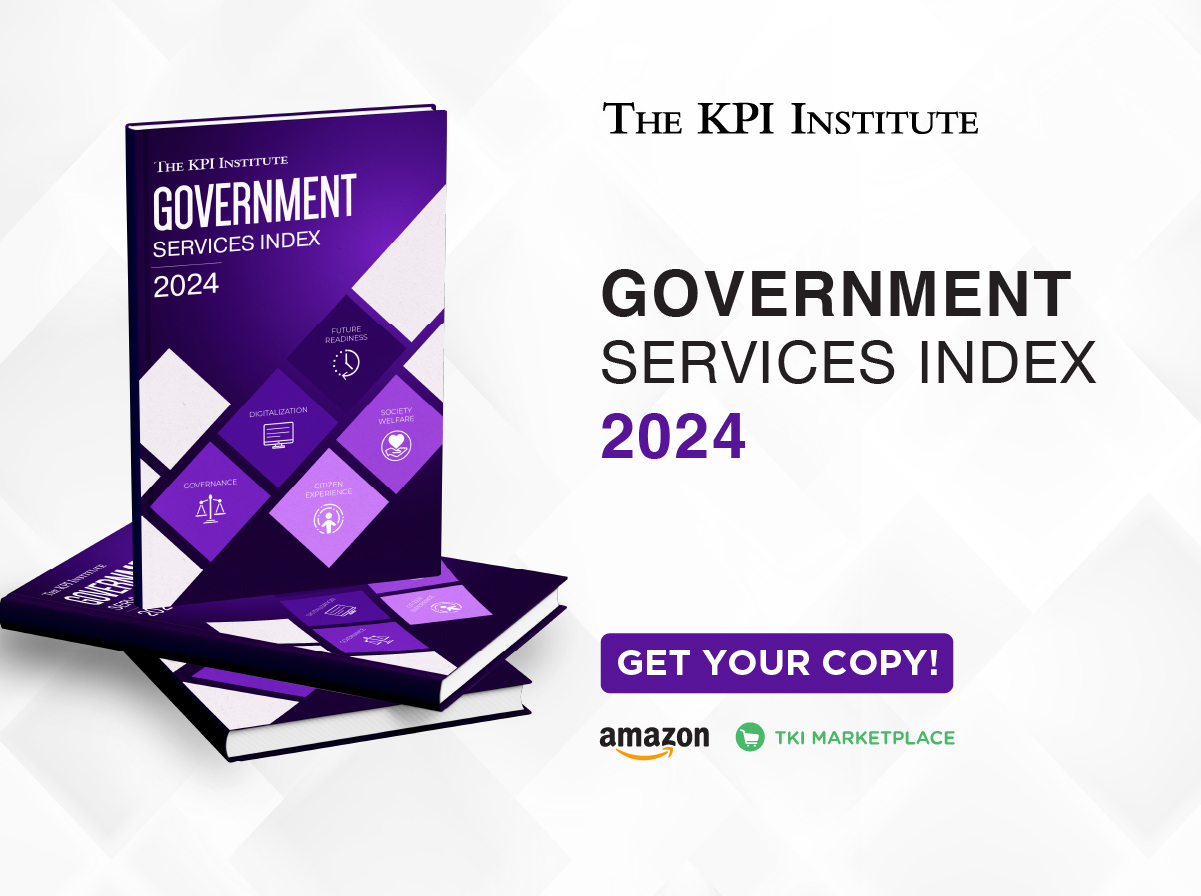
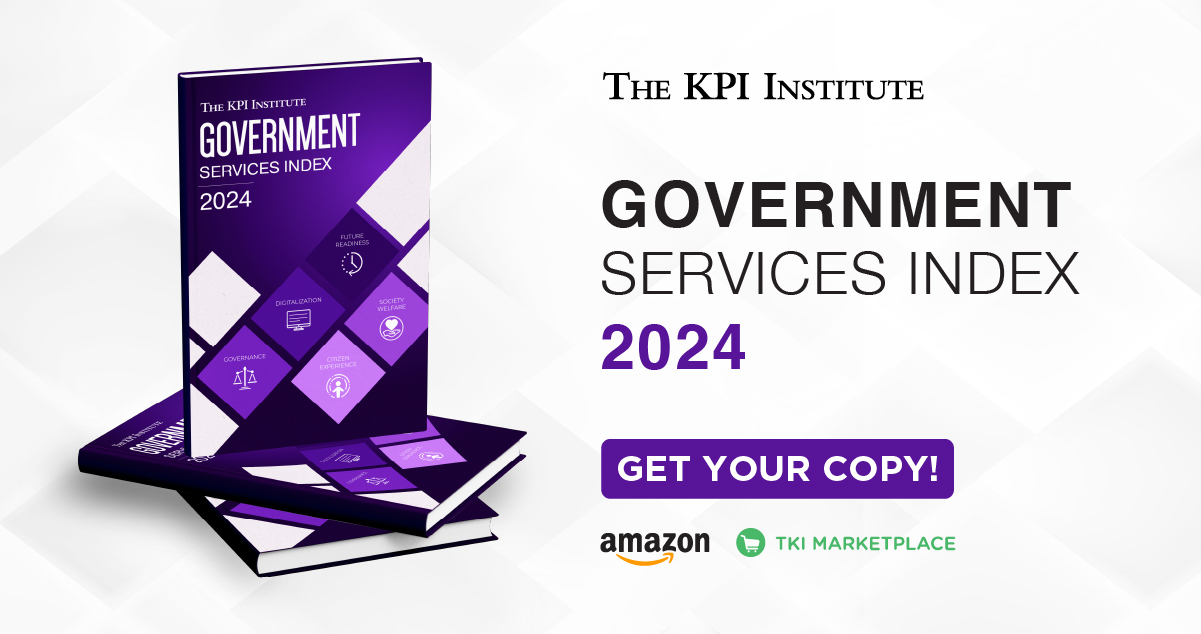
In its third year, the Government Services Index (GSI), published by The KPI Institute (TKI), continues its mission to contribute to the improvement of government service delivery standards worldwide, providing a comprehensive evaluation framework to enhance efficiency and service quality for citizens. 

The GSI 2024 aims to serve as a vital tool for policymakers by providing a benchmark for assessing public service performance across countries and offering insights into service delivery strengths and weaknesses, thereby guiding better decision-making. Researchers can also benefit from its comprehensive data for further studies. By highlighting top performers and identifying areas for improvement, it encourages governments to adopt innovative practices and prioritize citizen-centric approaches.

The Index not only highlights top-performing nations in each region and dimension but also reflects a meticulous development process to ensure its rigor and reliability. Extensive research involved analyzing over 100 scholarly articles and 40 global indices to identify critical areas of public service quality. Additionally, a comprehensive review of more than 900 indicators was conducted to select the most relevant and credible measures. By aligning the GSI with internationally recognized indicators, it provides a robust framework for comparing government services across diverse regions. 

Key dimensions of the GSI 2024

Covering 122 countries–expanding from 107 countries in the GSI 2023–across five world regions: America, Europe, Asia and Oceania, Africa, and the Middle East, the GSI 2024 incorporates data from 30 carefully chosen indicators aligned with its five key dimensions: 

  • Future Readiness – the capability of government entities and institutions to adjust, innovate, and efficiently respond to the changing demands and challenges of future societies
  • Digitalization – the significance of leveraging technology and transforming how citizens engage with public services
  • Governance – fulfilling the government’s responsibility to create and execute policies that foster national development while upholding efficiency, effectiveness, transparency, and integrity
  • Society Welfare – the government’s initiatives to minimize inequalities and improve the quality of life for individuals and communities through various programs and policies
  • Citizen Experience – the combination of interactions, perceptions, and experiences citizens have when engaging with government entities, including online platforms, in-person services, representative dealings, and civic participation

With its global reach and comprehensive methodology, the index empowers governments to enhance their services, ensuring they meet the dynamic needs of citizens in an ever-changing world by diving into the current performance of governments worldwide and providing a forward-looking assessment of their preparedness to tackle the challenges of 2025 and beyond.

Where do governments stand today?

In an era of rapid transformation driven by new technologies, emerging trends, and the rise of artificial intelligence (AI), governments worldwide are in continuous navigation of adapting to changes to deliver high-quality public services since societal needs are evolving as well. In the 2024 GSI, let’s explore a bit how governments are performing currently.

The Government Services Index (GSI) recognizes Finland, Denmark, and Singapore as the top three performers across five key dimensions of public service delivery, the same top-performing countries as in the GSI 2023. These countries are all classified as high-income, with two located in Europe and one in Asia and Oceania.

Finland ranks first globally in Governance (95.77) and Citizen Experience (96.31), while Singapore is the leader in Future Readiness (86.99). Denmark, though not ranking first in any specific area, excels in Digitalization (90.23) and Governance (95.70), securing second place in both. All three countries exceeded global and regional averages, with improved scores compared to the previous year.

The success of these nations can be attributed to their effective governance, advanced digitalization efforts, and comprehensive social policies. Citizens in these countries express strong confidence in their government’s ability to foster prosperity and improve well-being.

Finland is renowned for its transparent and inclusive governance that provides high-quality services, supporting employment, safety, and overall quality of life. The country’s focus on digitalization has minimized bureaucratic hurdles, which enables self-service and fostering a connected society. Furthermore, Finland upholds a human rights-centered foreign policy that promotes equality and prevents exclusion.

Offering efficient public services through advanced digital administration, Denmark stands out for its commitment to digitalization. Its government’s emphasis on digital infrastructure and cybersecurity, along with strategies that encourage democratic engagement and social inclusion, strengthens public service performance. Moreover, Denmark’s universal welfare model ensures equal access to essential services, effectively reducing inequality.

Singapore is recognized for its strategic planning and forward-thinking approach. The government prioritizes adaptability, introducing new policies to improve resilience. By investing in sustainability, digitalization, and future-ready skills, Singapore is capitalizing on growth opportunities and preparing its citizens for the future. The country’s citizen-centric governance ensures high-quality services and increasingly fosters active citizen participation.

To learn more about the detailed rankings, trends, and strategies shaping the future of government services, download the full free digital copy of the Government Services Index 2024 through the TKI Marketplace. An additional printed copy can be also purchased via Amazon. Get the report today!

The KPI Institute’s latest Government Services Index is here!

March 13th, 2024 Posted by Publications 0 thoughts on “The KPI Institute’s latest Government Services Index is here!”

The KPI Institute (TKI) released the Government Services Index (GSI) 2023, a comprehensive compilation of indicators designed to evaluate government service performance based on five key dimensions: Future Readiness, Digitalization, Governance, Society Welfare, and Citizen Experience, which are aligned with the collected data from 30 indicators.

The GSI 2023 report is the result of extensive research and analysis, drawing upon a diverse array of sources. Over 100 scholarly articles and 40 global indexes were reviewed to identify pertinent areas for assessing government service quality and the availability of global data. This rigorous process ensured that the report reflects the most relevant and up-to-date insights into the state of government services across different regions and sectors.

The GSI 2023 report has major implications for governance stakeholders worldwide. Policymakers can get insights into service delivery strengths and weaknesses, guiding them to better decision-making, while researchers may benefit from comprehensive data for further studies. Moreover, citizens might gain a better understanding of government service quality, empowering advocacy for positive change.

By examining data from 107 countries and five world regions, this report has identified the top performers in each dimension, shedding light on best practices and areas for improvement. In the GSI 2022, the United Arab Emirates (UAE) dominated the overall GSI ranking. The country placed first in Adaptability and Talent, third in Impact, and fourth in Governance and Digitalization. 

Has the UAE been able to maintain its position in 2023? Which countries are currently leading in each dimension?  Grab a copy now of the Government Services Index 2023 report and find out. For more information, visit https://kpiinstitute.org/government-services-index-2023/

The Government Services Index 2022: An Overview of Post-pandemic Government Performance

December 2nd, 2022 Posted by Press release 0 thoughts on “The Government Services Index 2022: An Overview of Post-pandemic Government Performance”


The Government Services Index Report –  2022  is a composite set of indicators that aims to capture the performance of governments in key areas of public service that drive resilience and high adaptability to change.

Through a thorough assessment of some of the most crucial aspects of good governance in the post-pandemic period, The KPI Institute releases the Government Services Index 2022. The report investigates the performance of governments in critical areas of public service that drive resilience and high adaptability to change through five key dimensions:

  • Adaptability – the ability to easily adapt to change, respond to problems quickly and efficiently, and maintain resilience in a constantly changing environment.
  • Talent –  attracting, retaining, and developing skills and knowledge in the public sector.
  • Digitalization – the significance of rethinking citizen-public service interactions in light of technology.
  • Governance – fulfilling governments’ obligations to develop and carry out policies that advance their nations’ development while demonstrating effectiveness, efficiency, openness, and integrity.
  • Impact – ensuring that citizens of the nation have improved access to essential services and a higher quality of life.

The Government Services Index Report covers seven world regions, ranks  66 countries, and corroborates data from 32 indicators reflective of the aforementioned dimensions

Report Overview

  • Preface
  • Index Methodology
  • Country Profiles

General Findings

  • Global Leaders in Government Services
  • Government Performance by Income Levels
  • Regional Dashboards

Overview of Rankings

Adaptability

  • General Outlook
  • Global Overview of Indicators
  • Regional Insights

Talent

  • General Outlook
  • Global Overview of Indicators
  • Regional Insights

Digitalization

  • General Outlook
  • Global Overview of Indicators
  • Regional Insights

Governance

  • General Outlook
  • Global Overview of Indicators
  • Regional Insights

Impact

  • General Outlook
  • Global Overview of Indicators
  • Regional Insights

Get your free copy of the Government Services Index 2022 today, from here! For inquiries regarding the Index, contact Marcela Presecan, Head of Research:  marcela.presecan@kpiinstitute.com, or +61 (390) 282 223.

NEW SMARTKPIS.COM REPORT RANKS THE TOP COMPLIANCE AND AUDIT MANAGEMENT KPIS OF 2011- 2012

May 21st, 2013 Posted by Research 0 thoughts on “NEW SMARTKPIS.COM REPORT RANKS THE TOP COMPLIANCE AND AUDIT MANAGEMENT KPIS OF 2011- 2012”

Top-KPI-Report-Covers-2011-2012-Compliance and Audit ManagementMay 21, 2013, Melbourne, Australia – The KPI Institute, the global authority on Key Performance Indicators (KPIs) research and education announces the launch of a new report in its 2011-2012 edition of its popular Top 25 series of reports. The series is based on research conducted through www.smartKPIs.com, which contains over 20,000 Key Performance Indicator examples, making it the world’s largest source of thoroughly documented KPIs.

Compliance and Audit refer to conducting business activities according to established guidelines, specifications or legislation. Depending on the type of the organization – public or private, auditors check its output against certain characteristics. The two terms, although different, are closely connected: compliance audits check on the implementation of written manuals, procedures and work instructions, while the management audit focuses on results, evaluating the effectiveness and suitability of controls, by challenging underlying rules, procedures and methods. (more…)

NEW SMARTKPIS.COM REPORT RANKS THE TOP GOVERNANCE KPIS OF 2011- 2012

May 20th, 2013 Posted by Research 0 thoughts on “NEW SMARTKPIS.COM REPORT RANKS THE TOP GOVERNANCE KPIS OF 2011- 2012”

Top-KPI-Report-Cover-2011-2012-Governance May 20, 2013, Melbourne, Australia – The KPI Institute, the global authority on Key Performance Indicators (KPIs) research and education announces the launch of a new report in its 2011-2012 edition of its popular Top 25 series of reports. The series is based on research conducted through www.smartKPIs.com, which contains over 20,000 Key Performance Indicator examples, making it the world’s largest source of thoroughly documented KPIs.

Corporate governance, according to the Cadbury Committee of the European Corporate Governance Institute, refers to “the system by which companies are directed and controlled”. Clear and efficient governing ensures that the interest groups trust the Company and also underlines the business utility, thus increasing the shareholder value. The mechanisms involved in the process are regulatory and market related. An important part is played by the relationships between a company’s management, its board, its shareholders and stakeholders and obviously, by the goals for which the company is governed in the first place. (more…)

Recent Comments

    Archives