
Posts tagged "Operational Performance"

FREE mid-year performance review resources to help organizations finish 2026 strong

May 25th, 2026 Posted by Performance Management, Publications, Research, Webinar 0 thoughts on “FREE mid-year performance review resources to help organizations finish 2026 strong”

Half of 2026 has already passed.

Many organizations now face a familiar question: What comes next?

January brought ambitious plans. Leadership teams approved strategic initiatives. Departments rolled out new KPIs. Managers tracked targets with optimism. Then daily operations took over. Priorities shifted. Reports piled up. Some initiatives lost momentum.

A mid-year performance review gives organizations a chance to pause and reassess. This period can expose weak reporting practices, misaligned KPIs, and execution gaps. It can also uncover new opportunities.

Several business leaders now look for practical support instead of lengthy theory. Free performance management resources can help teams rethink priorities, refine KPI reporting, and improve decision-making during the second half of the year.

The KPI Institute offers a wide range of free resources that support strategy and performance management. From articles and webinars to KPI toolkits and publications, these materials can support organizations that want clearer direction for the months ahead.

Why a Mid-Year Performance Review Matters

A business strategy may look solid on paper and still fall short during execution.

Some organizations collect too many metrics. Others track KPIs with little connection to strategic priorities. In some cases, teams produce reports every month without any discussion about performance trends.

A mid-year performance review can help organizations identify:

  • KPIs that no longer reflect current priorities
  • Reporting practices that consume too much time
  • Departments that work in silos
  • Initiatives with weak follow-through
  • Data that lacks context

Business conditions also change throughout the year. Market shifts, operational issues, and workforce challenges can alter priorities within a few months. Companies that revisit performance data during the middle of the year often gain a clearer picture of what deserves attention.

Free KPI Resources for Better Performance Tracking

KPI reporting remains a challenge for many organizations.

Some reports contain too much information. Others focus on metrics that offer little insight into operational performance. Confusing dashboards can also slow down decision-making.

The KPI Institute provides free KPI resources that can help teams improve reporting practices and KPI selection.

These resources include:

Organizations can use these materials to review existing KPIs and remove metrics that no longer serve a purpose. Clear KPI documentation can also reduce confusion among departments.

A KPI should support action. A metric without direction often turns into noise.

Strategy Execution Resources for the Second Half of 2026

A strategy document alone will not keep projects on track.

Execution problems usually appear during the middle of the year. Deadlines slip. Teams lose focus. Managers shift attention to urgent operational concerns. Strategic initiatives move into the background.

This pattern appears across many industries.

Strategy execution resources can help organizations reassess priorities and restore alignment between objectives and day-to-day work.

The KPI Institute shares free materials on:

Readers can also explore Performance Magazine articles that discuss real business cases, performance trends, and management practices from different sectors.

These resources can help leadership teams ask better questions during a mid-year performance review:

  • Which initiatives still support strategic priorities?
  • Which KPIs need revision?
  • Which projects no longer justify additional resources?
  • Which departments require stronger coordination?

Clear discussions often produce better outcomes than lengthy reports.

Free Business Performance Review Resources

A business performance review should go beyond numbers.

Financial results matter, but they rarely tell the full story. Operational delays, employee engagement issues, and weak communication can affect organizational performance long before financial problems appear.

Free business performance review resources can help managers examine performance from multiple perspectives.

The KPI Institute offers:

Common Mid-Year Performance Problems

Several issues tend to surface during a mid-year performance review.

  • KPI overload: Some organizations track too many metrics. Teams spend more time collecting data than discussing results.
  • Reporting fatigue: Employees may see reports as routine paperwork instead of decision-support tools.
  • Weak alignment: Departments may pursue different priorities without clear coordination.
  • Outdated targets: Business conditions can change after the first quarter. Some targets may no longer reflect current realities.
  • Lack of accountability: KPIs without ownership often lead nowhere.

These problems rarely disappear on their own. Organizations need structured discussions, practical tools, and reliable resources.

A Practical Time for Reassessment

The second half of the year still offers enough time for course correction.

Organizations do not always need major restructuring. Small adjustments can produce noticeable results. A revised KPI dashboard, a focused review meeting, or a clearer reporting structure may improve performance discussions across teams.

A mid-year performance review can also help organizations prepare for next year. Teams that identify recurring problems early may avoid the same issues during annual planning cycles.

The KPI Institute continues to publish research, articles, newsletters, and performance management resources for professionals across industries. And this may be the right time to review what works, address weak spots, and move forward with clearer priorities.

_____________________________________________________________________________________

The KPI Institute is a global leader in business performance research and solutions, specializing in practice domains including strategy, key performance indicators (KPIs), employee performance, customer service, and innovation management. For over 20 years, The KPI Institute has established international standards and best practices for KPIs across both private and public sectors.

What We Offer:

  • Certifications & Training: Practical programs delivered worldwide—live online, offsite, and customized—spanning 6 continents and 7 offices in Australia, Southeast Asia, Europe, and the Middle East.
  • Knowledge Platforms: Access to www.smartKPIs.com, the world’s largest documented database of KPIs, with over 21,600 examples published and 148,000+ members in our online communities.
  • Publications: Over 460 publications, including books, research papers, and practical guides, providing insights to enhance organizational performance.
  • Advisory & Implementation Support: Expert guidance to apply insights in practice for measurable impact.

Our Reach and Impact:

  • 81,000+ companies registered on our platforms
  • 2.5 million+ professionals reached through training and knowledge services
  • 128 research client countries and 120 global partner organizations 

Website: www.kpiinstitute.org.

Email: office@kpiinstitute.org

LinkedIn: The KPI Institute

Quarterly KPI Highlights: from assets to output, measuring what matters in operations

March 26th, 2025 Posted by KPIs 0 thoughts on “Quarterly KPI Highlights: from assets to output, measuring what matters in operations”

Performance gaps often start not from a lack of effort, but from a lack of clarity. When teams don’t know what to aim for or how success is measured, resources are wasted, and strategic goals drift out of reach. One way to bridge the gap between strategy and execution could be to use key performance indicators (KPIs) that help translate abstract goals into measurable actions.

However, according to The KPI Institute’s State of Strategy Management Practice – 2023 Global Report, many organizations still face foundational challenges with KPIs: 25% struggle to align KPIs and targets across departments, while 24% find it difficult to select the right KPIs—an issue that has grown by 4% over the past year. Despite these hurdles, KPI usage remains strong across both people and business performance. In fact, the same report reveals that organizations primarily use KPIs in two key areas: employee performance evaluations and corporate performance monitoring, with 60% of respondents emphasizing both. 

With KPIs influencing both day-to-day decisions and long-term priorities, their impact is far-reaching. However, when not aligned with strategic goals, they can create a gap between what the organization aims to achieve and what it delivers. That is why it is critical that they reflect strategic priorities, not just routine activities.  

To put this all into practice, we’re highlighting two KPIs in Q1 2025 that directly link operational efficiency with broader strategic goals: 

KPI of February: % Return on assets (ROA) – This metric evaluates a company’s ability to generate profit from its total assets, shown as a percentage of net income to assets. It aims to analyze how well a business utilizes its assets to drive profitability.  Aligning asset utilization with strategic growth goals helps companies achieve greater financial efficiency and improve competitive positioning in their industry.

When evaluating % ROA, it’s important for companies to benchmark against peers in the same industry, as asset structures vary. For instance, manufacturing firms tend to be asset-intensive and rely heavily on physical resources to drive income. Unlike businesses in the technology or service sectors, these companies typically depend on intangible assets like software, data, or expertise.

To learn more about how to utilize this metric, get a free copy of the poster from TKI Marketplace.

KPI of March: % Production schedule attainment – This indicator measures how much of the actual production output was completed as scheduled within the reporting timeframe. This metric helps verify whether the production process stays on track with the planned schedule.

Organizations can improve their % Production schedule attainment by adopting scheduling techniques that align with their business model and operational requirements. When production is on schedule, organizations can reduce costs, improve resource utilization, and enhance customer satisfaction, all of which directly contribute to long-term competitiveness and profitability. To explore how various scheduling methods impact this KPI and gain deeper insights into the indicator, download a free copy of the poster from the TKI Marketplace.

These digital posters are part of the KPI of the Month series by The KPI Institute. It is a free infographic series designed to provide practical insights into the application of key performance indicators. Each edition focuses on one specific KPI, offering clear explanations of terminology, addressing common challenges in its use, and outlining essential details such as its definition, calculation, Balanced Scorecard relevance, data profile, typical targets, and actionable recommendations.

Set Your Goals: Experts Explain the Importance of Benchmarking

March 25th, 2022 Posted by Certification, Courses, E-learning 0 thoughts on “Set Your Goals: Experts Explain the Importance of Benchmarking”

Benchmarking is a powerful management tool used by businesses to track progress and assess their goals. It involves measuring the company’s operational performance compared against internal and external standards. 

Benchmarking is also about researching best practices in the industry to help a company reach a high-ranking performance level. It allows organizations to build a solid starting point.

Andrea Minelli, a management consultant at The KPI Institute, wrote an article on Performance Magazine about why companies must invest in benchmarking. He stressed that benchmarking has the potential to be a “powerful tool to promote continuous improvement in performance.”

Andrea explained that benchmarking allows businesses to concentrate on their advantages and disadvantages. It also enables them to increase their market position.

In another article on Performance Magazine, benchmarking enables businesses to compare performance data collected by analyzing identical processes or activities carried out by other businesses. The process of benchmarking lets organizations discover, adapt, and replicate the strategies that created the greatest outcomes for their best competitors.

According to the author, Andrada Ghețe, benchmarking supports the idea “that performance numbers can mean less when analyzed without having a point of reference (a benchmark) as a comparison starting point.”

“For example, in the airline industry, an airline company has a turnaround time of 55 minutes. Is it good, or bad? It is hard to find the answer, unless you compare this 55 minutes turnaround time to an objective standard, such as the industry average turnaround time for other airline companies,” Ghete wrote.

According to Business News Daily, the three most common types of benchmarking are Internal, Competitive, and Strategic.

Internal benchmarking refers to conducting comparisons within an organization. It can help a company save time and money by identifying and eliminating waste. Employee performance and effectiveness, as well as how employees use the resources supplied by the company, are examples of internal benchmarks that firms should consider. яндекс

Competitive benchmarking allows businesses to compare their company’s performance, product, and services against their competitors in the same market. Competitive benchmarks let companies catch up with the trends and adjust their marketing strategies to have a competitive advantage.

Strategic benchmarking refers to taking “a long-term view of company direction relative to the future strategies of competing companies.”

If you would like to know more about how your organization can benefit from benchmarking, join The KPI Institute’s Certified Benchmarking Professional Live Online on 18-22 April 2022.

Understand the importance of knowing the strengths and weaknesses of your best competitor. Learn how to constantly improve the performance of your organization. Know the difference benchmarking can make in your business  and register here.

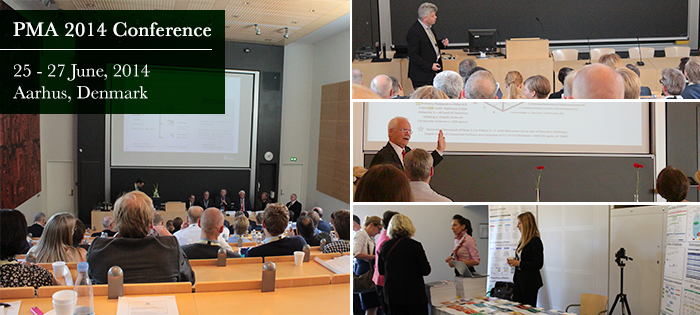
The KPI Institute’s coverage of PMA 2014 Conference

July 22nd, 2014 Posted by Events 0 thoughts on “The KPI Institute’s coverage of PMA 2014 Conference”

The KPI Institute’s participation at the PMA 2014 Conference, held in Aarhus, Denmark had as a main outcome the achievement of a full and comprehensive conference cover. PERFORMANCE Magazine, The KPI Institute’s magazine dedicated to performance and strategy, provides an extensive database that comprises 11 interviews with professionals, as well as coverage from roughly over 80 presentations delivered by speakers all throughout the 3 days of conference.

PMA2014

(more…)

Recent Comments

    Archives