Posts tagged "smartKPIs"

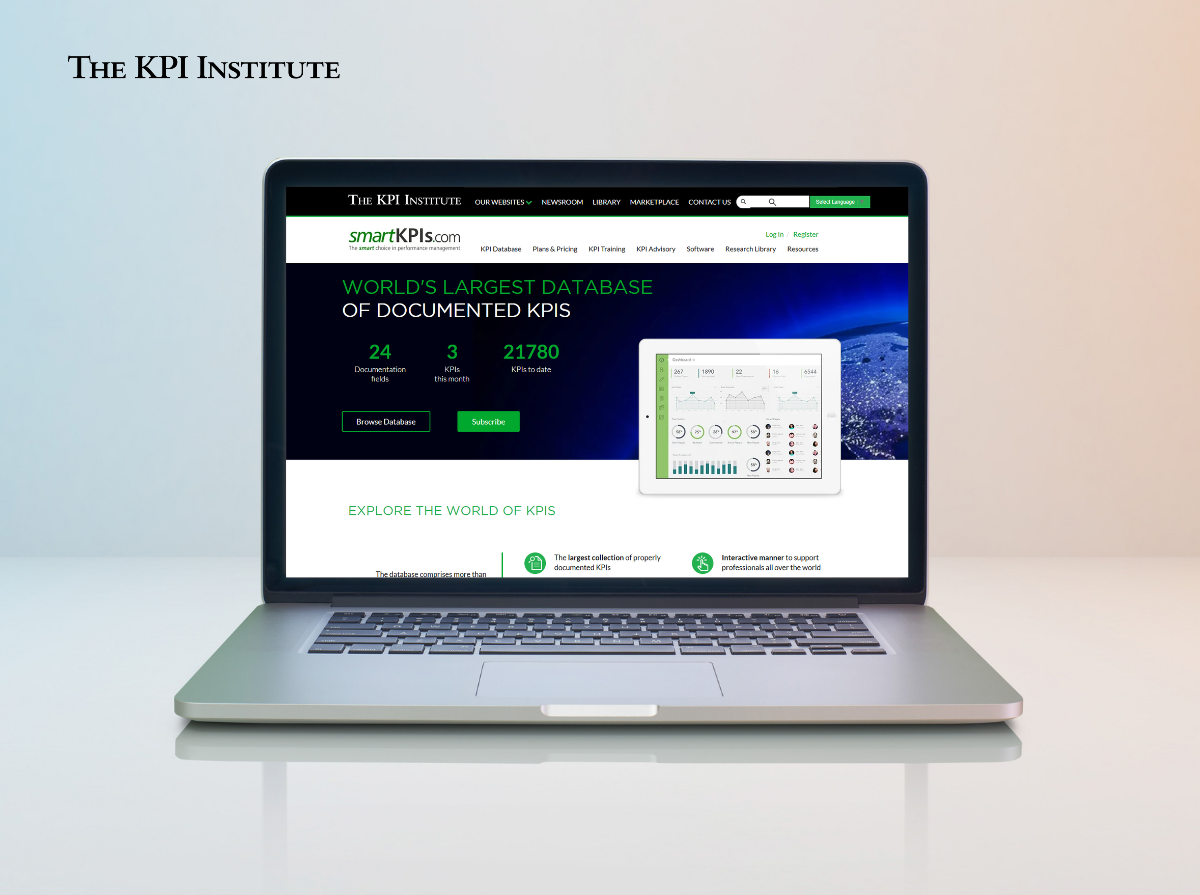
smartKPIs Database Grows to 21,780 Documented KPIs

November 4th, 2026 Posted by E-learning, KPIs, Research 0 thoughts on “smartKPIs Database Grows to 21,780 Documented KPIs”
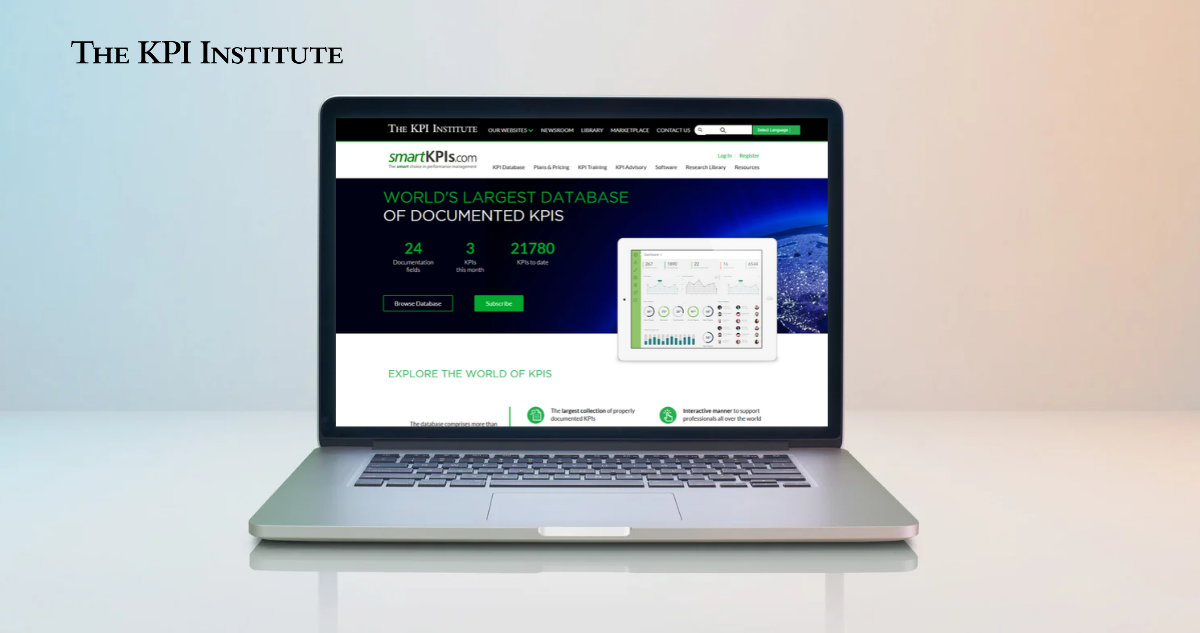
The KPI Institute’s smartKPIs database now contains 21,780 documented key performance indicators (KPIs), reflecting the ongoing research conducted by The KPI Institute team into performance measurement across organizational functions and industries.

The database provides professionals with a collection of documented KPIs that can serve as a reference when identifying, selecting, and reviewing performance measures. Its content covers 16 functional areas and 25 industries, offering examples relevant to different organizational responsibilities and operating environments.

A database covering multiple functions and industries

The smartKPIs database includes indicators from a broad range of functional areas, from finance and human resources to technology, operations, and strategy. Users can search for KPIs related to Accounting, Corporate Services, Corporate Social Responsibility, Finance, Governance, Compliance and Risk, Information Technology, Knowledge and Innovation, and Marketing and Communications.

Other areas include Occupational Health and Safety, Online Presence and eCommerce, Portfolio and Project Management, Production and Quality Management, Sales and Customer Service, Strategy and Performance Management, Supply Chain, Procurement and Distribution, and Sustainability.

The database also covers 25 industries, including Arts and Culture, Construction and Capital Works, Education and Training, Financial Institutions, Government, Healthcare, Hospitality and Tourism, Manufacturing, Media, Retail, Telecommunications, Transportation, and Utilities.

This classification allows users to narrow their searches according to their professional responsibilities or industry context. For example, a human resources professional can look for indicators related to workforce performance, while a manufacturing specialist can consult KPIs relevant to production and quality management.

By bringing together indicators from different areas, the database offers a reference for professionals who need to identify potential measures for their departments, review existing performance measurement practices, or develop organizational scorecards.

Documented KPIs for professional reference

The collection includes more than 7,000 premium documented KPIs. Beyond KPI names, the platform provides access to definitions and additional documentation according to the user’s subscription plan.

Documented indicators can help professionals understand what a KPI measures before considering its application within their organization. This is particularly relevant when teams are reviewing their existing measures, comparing alternatives, or developing a consistent approach to performance reporting.

However, selecting a KPI requires consideration of the organization’s objectives, operating context, and available data. Indicators found in the database can serve as reference points, while their suitability should be assessed against the specific requirements of each organization.

The database is maintained through the ongoing research activities of The KPI Institute, which develops resources for professionals working in performance measurement and management.

Subscription options for different needs

smartKPIs offers four subscription plans, allowing users to select an access level according to their informational requirements.

The Preview plan is free and provides access to 100 KPI names per year. The Starter plan costs $19 for six months and includes access to 10 documented KPIs. The Standard plan costs $99 per year and provides access to 300 KPI names and definitions. The Premium plan costs $249 per year and includes access to 500 documented KPIs.

These plans offer different levels of access to the database, depending on whether users need to browse KPI names, consult definitions, or access documented indicators for more detailed reference.

Professionals can review the available features and compare subscription options on the smartKPIs website.

With 21,780 documented KPIs across 16 functional areas and 25 industries, smartKPIs remains a research-based resource for professionals seeking performance measures relevant to their work.

To learn more, visit smartKPIs.com or view the available subscription plans.

Inside a KPI professional’s toolkit: from KPI selection to target setting

October 21st, 2026 Posted by Certifications, E-learning 0 thoughts on “Inside a KPI professional’s toolkit: from KPI selection to target setting”

Key performance indicators (KPIs) help organizations assess progress toward strategic objectives, monitor operational results, and identify areas that require attention. However, effective performance measurement involves more than choosing a few metrics and tracking their results. Professionals must also determine what to measure, establish appropriate targets, organize performance information, and review results in the context of organizational priorities.

A structured approach can help professionals move from selecting indicators to using performance data in decision-making. Understanding the key stages of this process is a useful starting point.

What Does a KPI Professional Need to Consider?

Developing a performance measurement system involves several connected activities. Each requires a different set of considerations and tools.

1. Selecting the Right KPIs

The first step is to determine which indicators best reflect the objectives being measured. A KPI should relate to a specific performance priority and provide information that supports assessment or decision-making.

Professionals can begin by examining strategic objectives, identifying the results that matter, and researching indicators relevant to their industry or functional area. They must then assess whether the selected KPIs are appropriate for their organizational context and whether the required data is available.

Using an indicator simply because it appears on a popular KPI list does not guarantee that it will be relevant to a particular organization.

2. Defining Measures and Targets

After selecting the indicators, professionals need to clarify how each KPI will be measured. This involves defining the metric, its calculation method, the data source, the reporting frequency, and the person or team responsible for monitoring it.

Target setting is another important step. A target establishes the expected level of performance within a defined period. It should be considered in relation to organizational objectives, historical results, available resources, and other relevant evidence.

Without clear definitions and appropriate targets, different teams may interpret the same KPI differently or struggle to assess whether performance meets expectations.

3. Organizing Performance Information

Once KPIs and targets have been established, professionals need a way to present and communicate the resulting information.

Scorecards and dashboards can organize indicators, targets, and actual results so that users can review performance more systematically. The format should reflect the needs of its intended audience. An operational team may require detailed measures for day-to-day monitoring, while senior management may need a more concise overview of strategic performance.

The choice of presentation also matters. Performance information should be understandable, consistent, and relevant to the decisions users need to make.

4. Monitoring and Reviewing Results

Performance measurement continues after a system has been designed. Professionals must review actual results against targets, investigate significant deviations, and determine whether corrective action is necessary.

A review should go beyond identifying whether a target was met. It should also consider the factors behind the result, the implications for organizational objectives, and the actions that may improve future performance.

Regular reviews can help organizations identify recurring issues, reconsider assumptions, and determine whether their existing indicators remain appropriate.

Why Reference Materials and Practical Tools Matter

Each stage of KPI management presents different challenges. Researching indicators requires access to relevant references. Designing a scorecard or dashboard requires a suitable structure. Monitoring performance requires clear definitions and consistent reporting practices.

Professionals do not necessarily need to develop every resource from scratch. Existing references and templates can provide starting points for their work, reduce the effort involved in preparing supporting documents, and help them explore different approaches.

However, these resources should be selected carefully. A template or KPI reference is most useful when it fits the organization’s objectives, industry, data requirements, and measurement practices. It should support professional judgment rather than replace it.

Exploring Resources for KPI Professionals

For professionals looking for reference materials and practical tools, The KPI Institute’s Marketplace brings together several resource categories related to KPI research and performance measurement.

KPI Dictionaries for Indicator Research

The KPI Dictionaries collection includes references organized by industry and functional area. Listed areas include healthcare, financial institutions, utilities, transportation, real estate, professional services, government, finance, human resources, information technology, marketing, supply chain, and sales and customer service.

These dictionaries can serve as starting points for researching indicators relevant to a particular business function or industry. Professionals can then assess which measures best correspond to their objectives and measurement requirements.

Templates for Scorecards, Dashboards, and Toolkits

The Templates collection includes resources for performance measurement and employee performance. Its categories include scorecards, dashboards, and toolkits, with examples for specific industries and functional areas.

Listed resources include recruitment agency scorecards and dashboards, restaurant performance resources, and templates for healthcare and library settings.

Professionals can explore these options when preparing performance reports or developing documents to organize and communicate KPI results. Any template should be adapted to the organization’s specific requirements.

smartKPIs Subscription Options

For ongoing KPI research, professionals can also explore the smartKPIs subscription options. The Marketplace lists Standard and Premium subscription options for accessing the smartKPIs resource.

Those who regularly research indicators across different projects or functional areas can review the available subscription details and assess which option suits their needs.

Building a More Structured Approach to KPI Management

Effective KPI management connects indicator selection, target setting, reporting, and performance review. Each stage contributes to a measurement process that helps professionals assess results and understand how they relate to organizational objectives.

The right resources can support this work, but their usefulness depends on how well they fit the organization’s context and how consistently they are applied.

Professionals seeking additional references for KPI research and performance measurement can explore The KPI Institute’s Marketplace, including its KPI Dictionaries, templates, and smartKPIs subscription options.

Explore the available resources at The KPI Institute Marketplace.

World’s largest KPI database now features 21,772 documented key performance indicators

June 1st, 2026 Posted by KPIs, Performance Management, Research 0 thoughts on “World’s largest KPI database now features 21,772 documented key performance indicators”

Organizations collect vast amounts of data, yet many still face a familiar challenge: identifying the right key performance indicators (KPIs) to measure performance and support decision-making. The search for reliable business metrics has fueled interest in KPI databases that provide documented KPIs, KPI examples, and established performance measurement practices.

smartKPIs, developed by The KPI Institute, has reached a new milestone with a database containing 21,772 documented KPIs.

This achievement strengthens its position as the world’s largest KPI database and one of the most extensive KPI libraries available to professionals across industries.

The KPI database includes more than 7,000 premium documented KPIs and covers 16 functional areas and 25 industries. Its collection spans sectors such as finance, healthcare, manufacturing, education, retail, logistics, public administration, sustainability, customer service, human resources, and supply chain management. Users can explore KPI examples and business metrics based on industry, department, or area of expertise.

What sets the platform apart is the breadth of contexts covered within its KPI library. Organizational context KPIs focus on business performance at the industry and functional level. Global context KPIs address topics such as economic development, public health, social progress, environmental performance, and sustainability. Personal context KPIs provide metrics related to productivity, time management, work-life balance, budgeting, and personal well-being.

The platform also serves as a resource for professionals who want to strengthen their understanding of KPI managementand performance measurement. Its learning materials cover topics such as performance management and measurement, KPI formulation and selection, target setting, KPI visualization, analytics, reporting practices, performance management levels, and common KPI pitfalls. These resources help both newcomers and experienced practitioners build stronger measurement frameworks.

Interest in KPI benchmarking and KPI documentation has grown as organizations seek greater consistency in reporting. Different teams often use different definitions for the same metric, which can affect reporting accuracy and make performance comparisons more difficult. Access to documented KPIs gives professionals a common reference point when selecting indicators and developing performance management systems.

The platform’s reach extends beyond its database. More than 75,000 members form a global community focused on KPI management, business metrics, organizational performance, and performance measurement. This network allows professionals to exchange ideas, discuss industry practices, and learn from peers across different sectors.

A comprehensive KPI database can help organizations reduce the time spent searching for relevant indicators and provide access to proven KPI examples. Documented KPIs that include definitions, formulas, data sources, reporting frequencies, and interpretation guidelines can support more informed performance discussions and stronger reporting practices.

Free Preview Subscription and More!

Professionals interested in exploring the platform can begin with the free Preview subscription.

The plan provides access to 100 KPI names, the KPI Dashboard, and the Top 10 KPIs, offering an introduction to the world’s largest KPI database at no cost.

Those who require deeper KPI documentation, premium KPI examples, industry KPI reports, and expanded access to documented KPIs can review the Starter, Standard, and Premium subscription options. These plans provide varying levels of access based on individual and organizational needs. Subscribe to smartKPIs for free and discover how KPI documentation, KPI benchmarking resources, and performance measurement guidance can support better business decisions.

For additional features, premium content, and expanded access to the world’s largest KPI database, visit the platform and explore the subscription plan that best matches your requirements.

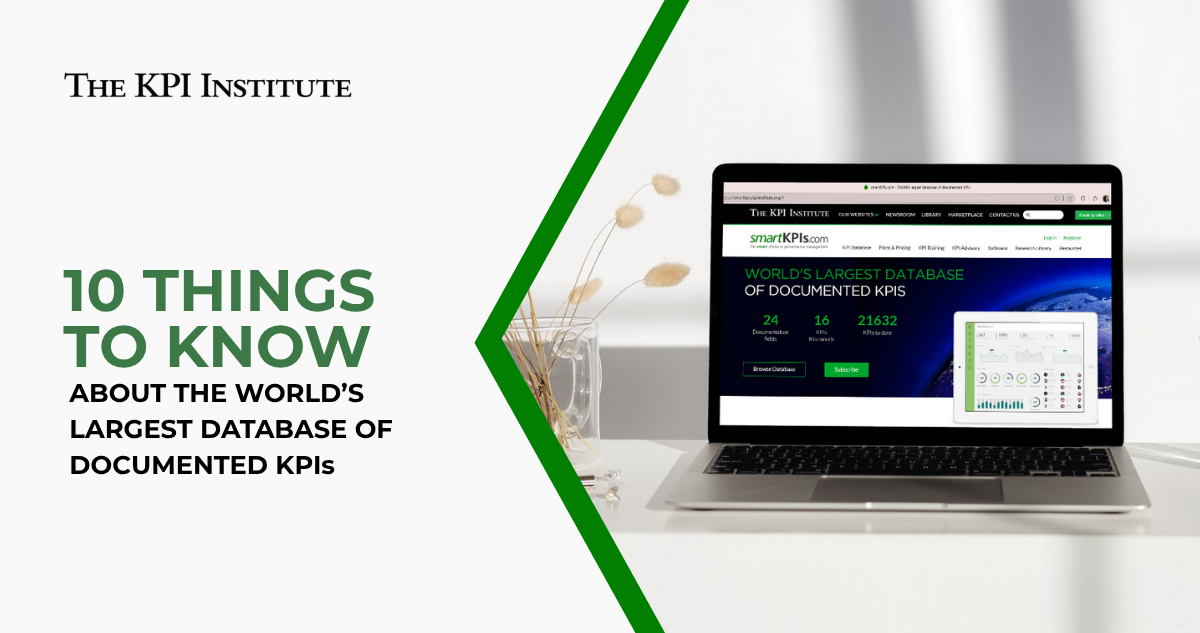
10 things to know about the world’s largest database of documented KPIs

July 23rd, 2025 Posted by KPIs 0 thoughts on “10 things to know about the world’s largest database of documented KPIs”

Created by The KPI Institute, a global leader in strategy and performance research and education, smartKPIs is the most comprehensive online resource of its kind. With over 21,000 real KPIs collected from organizations worldwide, the platform helps organizations and professionals define, compare, and select the right metrics faster and with greater confidence. Whether you’re setting key performance indicators (KPIs) for the first time or refining an existing performance framework, knowing where to look and what to look for makes a difference. Here are 10 things to know about smartKPIs:

  1. Massive KPI database: smartKPIs is home to over 21,000 documented KPIs, making it the world’s largest searchable repository for real-world key performance indicators. These metrics are drawn from published reports, internal dashboards, and on-the-ground case studies.
  2. Structured by domains and industries: The database is organized by industry, functional area, and even departmental level, helping users find context-relevant KPIs in seconds. This makes it ideal for benchmarking, performance system design, or refreshing outdated metrics.
  3. Professionally documented format: Each KPI is described using a standardized structure that includes definition, calculation formula, data source, and usage recommendations. This eliminates ambiguity and makes it easier for teams to implement indicators consistently.
  4. Quality assured by research analysts: Every entry is reviewed by a team of research analysts with expertise in measurement and performance management. This curation ensures the data stays reliable, relevant, and aligned with evolving business practices.
  5. Updated with real-world insights: The platform is continuously updated with indicators from actual business scorecards, public reports, and newly published research. This gives users access to trends as they unfold across industries and geographies.
  6. Supports KPI selection and cascading: smartKPIs helps users identify KPIs that align with strategic objectives and cascade them across organizational levels. Whether you’re managing enterprise strategy or tracking individual performance, it offers examples that scale.
  7. Enables benchmarking across sectors: With thousands of KPIs covering both common and niche sectors, users can compare metrics across industries to see how others measure similar goals. It’s especially useful for organizations looking to innovate or localize best practices.
  8. Integrates with learning tools and guides: Each KPI links to additional resources, such as toolkits, implementation guides, and online training offered by The KPI Institute. This creates a more complete support system for users looking to build internal capability.
  9. Trusted by global users: From Fortune 500 companies to government agencies and non-profits, the database is used by strategy, HR, finance, and operations teams around the world. It’s a preferred reference for those designing performance systems from scratch or improving legacy setups.
  10. Accessible with flexible plans: The platform offers a range of subscription options depending on organizational needs, from individual licenses to enterprise access. Users can also explore free samples before committing to full access.

For anyone working in performance design or KPI reporting, smartKPIs is more than a database—it’s a decision support tool. Visit the platform to explore real indicators, save time, and sharpen your measurement approach!

Recent Comments

    Archives